




 One of the questions we often hear from social purpose organizations when it comes to impact measurement is “where do I start?” For a busy, capacity-constrained team, it can be difficult to see the value in learning to do impact measurement in ways that feed deep learning, iteration, and organizational improvement. Too often, impact measurement is treated as an arduous and necessary task on a “to do” list for funders or investors that sits outside of daily operations.
This blog is the second in a three-part series highlighting one organization’s journey to use impact measurement for an expanded purpose. It is intended to help other social purpose organizations reimagine impact measurement as a key, indispensable tool in their strategic and operating framework.
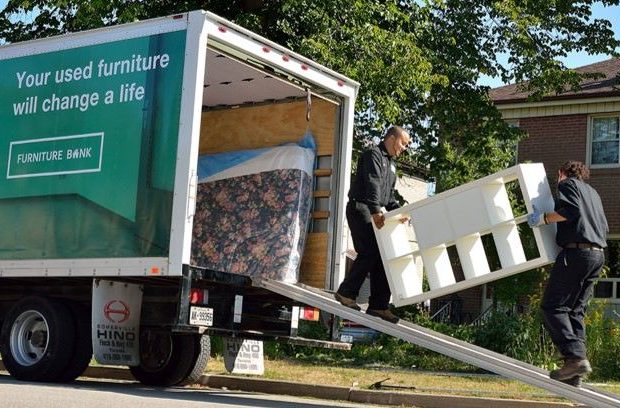
 The team’s work also yielded an unexpected internal metric that enabled the optimization of Furniture Bank’s trucking capacity. “You might imagine when you’re loading random pieces of furniture into trucks, it’s like playing 3D Tetris,” Dan explains. “And so we started to use the new volume calculator as a way of maximizing space. We did fail a number of times. We had some days where, on our model, we thought we had room and we didn’t, and that caused problems with donors.”